Wednesday, April 20, 2011

Writing Electronic Configurations of Neutral Atoms

We split this section into 2 parts, since it was getting very long.


Now, we will learn how to write configurations of neutral atoms.


1. Figure out how may electrons there are. (look at atomic number) Start at 1s and keep adding until there are none left.
2. When drawing arrows to show electron spins, always draw the upwards first, then downwards. You can have more upwards than downwards. (if this is confusing, read on and we will explain later)


For example, let's do Na.


Na has the 11th atomic number, and in a neutral atom, it has 11 electrons.


We always start with 1s. If we count to 11, we realize that there will be 2 in 1s, 2 in 2s, 6 in 2p, 1 in 3s, because 2+2+6+1 = 11.


If we want to visualize it:
1s   2s          2p             3s
↑↓   ↑↓       ↑↓ ↑↓ ↑↓         ↑


Each arrow represents one electron, and counting the arrows, there are 11.
Photobucket
Notice that the electron in 3s is not paired because there are not enough arrows. 
In written form, we would write the configuration as 
1s2 2s2 2p6 3s1 
The superscript just tells us how many electrons are in each subshell. Notice that the first 3 subshells are full, and the last one (3s) just has 1 electron. If the element was Magnesium, then it would be full, since magnesium has one more electron than sodium. 


Now, let's write some configurations for ions. This is pretty similar to above, but it just involves one extra step. For example, if we were given Cl-


The - just means that we need to gain an extra electron to make it full. First, just do the electronic configuration normally, as if the - charge did not exist. (in other words, do it for 17 electrons)


Photobucket

We would get 1s2 2s2 2p6 3s2 3p5. In arrows, it would be:
1s  2s         2p       3s        3p
↑↓  ↑↓   ↑↓ ↑↓ ↑↓   ↑↓    ↑↓ ↑↓ ↑↓
The 3p is not full, as there is one more spot available. Now, we look back at the charge. - means to add an electron, so we would add one to the last unfilled subshell. (in red)


For a + charged ion, we would still write it out as if it were neutral, but then removing electrons from the outermost. 


Now what if we were asked to do the configuration of an element with an extremely high atomic number? It would take forever! There's a shortcut called Core Notation.


The set of electrons can be divided into two subsets: core and outer. The core of the atom is the set of electrons with the configuration of the nearest noble gas with an atomic number lower than the element in question. 
The outer is the electrons outside the core. The core electrons normally take part in chemical reactions.


Photobucket
Step 1: locate the noble gas above the element. If we had Nickel, we would not use Krypton, even though it is closer. We would use Argon instead.
Step 2: Square bracket the noble gas configuration.
Step 3: Start from the noble gas and add electrons until you reach the element. 


For example, Chlorine. 
The noble gas above chlorine is Neon, which has 10 electrons. 
In written form, the configuration for chlorine would be: 


1s2 2s2 2p6 3s2 3p5. Now, we can replace the first 10 electrons with Ne. This means that 1s2 2s2 2p6 will be replaced. 


Core Notation for Chlorine: [Ne] 3s2 3p5
That seems so much simpler and cleaner than the entire written configuration, right?
However, you don't want to write it out fully, and then replace it. Instead, realize that Ne goes up to 2p6, and just write [Ne] first, then add the remaining electrons. 


Photobucket
There are two exceptions for electronic configurations. 
In copper, you would expect 1s2 2s2 2p6 3s2 3p6 4s2 3d9 or [Ar] 4s2 3d9. However, it is actually 1s2 2s2 2p6 3s2 3p6 4s1 3d10 or [Ar] 4s1 3d10. This is because copper likes to gain stability will a full d-subshell. 


In chromium, we expect [Ar] 4s2 3d4, but instead, we actually get [Ar] 4s1 3d5, because chromium likes to gain stability with a half-full d-subshell. 


Here's a worksheet:
http://www.chemteam.info/Electrons/WS-Configs&light.pdf
http://www.everettcc.edu/uploadedFiles/Student_Resources_and_Services/TRIO/Electron_configurations_wksht.pdf

And a video!

Electron Configuration, with Core Notation

In this lesson, we will introduce electronic configuration.

Electronic configuration is a notation that describes the orbitals in which electrons occupy, and it also gives the total number of electrons in each orbital.

In other words, it is just another way of showing which level electrons are in, just like Bohr's model.

Photobucket

For example, the electronic configuration for an element like carbon would be:

1s2 2s2 2p2

Now don't worry if that confuses you, because by the end of this blog, you'll know what they mean!

According to scientist Niels Bohr, electrons existed in specific energy states, and when an electron absorbs or emits energy, it can move from one level to another.

The scientific definition of an energy level is the maximum amount of energy an electron can hold.

When electrons are in "ground state", it means that all the electrons are in their lowest possible level. But when they are in an "excited state", it means that one or more of the electrons are in energy levels other than the lowest available level.

To write electron configurations, you should know these things:
1. Orbital - a region of space occupied by the electron
2. Shell - the set of all orbitals in the same energy level
3. Subshell - the set of orbitals of the same type.
4. There are four types of subshells (s, p, d, f)

Photobucket

s is like the starting point. In the very first energy level, only s-types exist. Since there are in energy level one, we can say they are 1s.
In the second energy level, s and p types exist. They are in energy level 2, so they are 2s and 2p.
In the third, s, p and d types exist (3s, 3p, 3d), and in the fourth, s, p, d, and f exist (4s, 4p, 4d, 4f).

In every orbital, there are 2 electrons.
An s-type consists of one orbital (2 electrons)
p consists of 3 orbitals (6 electrons)
d consists of 5 orbitals (10 electrons)
f consists of 7 orbitals (14 electrons)

Photobucket

The order of writing the levels are like the picture above. Arrange the orbitals like a descending staircase, with 1s at the top.

However, in a ground state, we must remember that we can only move on to the next level when the orbitals are full. Therefore, 1s2 should be at the top. The next step in the staircase would be 2s2 2p6.

Here is a good video of electron configuration. Unfortunately, the maker of the video disabled embedding, so here's a link.
http://youtu.be/xH1k1dtgiVY

Here's a good practice worksheet; however, you will be able to do the ones that ask for abbreviated configurations after you read the next blog!
http://misterguch.brinkster.net/PRA014.pdf

Monday, April 18, 2011

Atomic Structure

In the atom, there are 3 subatomic particles: neutrons, protons, and electrons.

Photobucket

Neutrons have a neutral charge, protons have a positive charge, and electrons have a negative charge. The neutrons and protons are in the nucleus, but the electrons are actually surrounding the nucleus in energy shells.

When an atom is neutral, it means that there is no net charge. This also means that the number of protons will equal to the number of electrons.

To find the number of protons, simply look at the atomic number of the element.

Photobucket

That means, if you add a proton to an element, it will become a totally different element.
Say, we have 4 protons in the nucleus of some element. This would be the element Beryllium. If we added a proton, then our element would change to Boron.

What if an atom does have some kind of charge? Then, it is called an ion. Atoms can gain or lose electrons by accepting or giving electrons to other atoms. If we are given the number of protons and the charge, we can find the number of electrons by

proton - charge

A negatively charged ion is called an anion. An anion has more electrons than protons, because non-metals tend to gain electrons.

In contrast, a positively charged ion is called a cation. This is when there are fewer electrons than protons. Metals are positively charged and tend to lose electrons.

Photobucket

The mass number is the total number of protons and neutrons, or it can also be found by rounding the atomic mass number to the nearest whole number. To calculate the number of neutrons in an atom, we can use the mass number and subtract from it the number of protons.

So: Mass number - atomic number (number of protons) = number of neutrons

Atomic mass is different from the mass number. The atomic mass is the average mass of an element's isotopes. They have decimal values because they are averages; however, the mass number is just a rounded number of the atomic mass.

If you add a neutron into the atom, you will get a heavier version of the element.

Now, let's try an example.
How many protons, electrons, and neutrons are in Co?
proton: 27
electron: 27
neutron: 59-27=32

An isotope of an element has the same atomic number, but a different number of neutrons or atomic mass.

Photobucket

Remember back in around December, when we used the atomic mass as the molar mass?
Well, now we can understand that this mass is really an average of value of a combination of isotopes.

Let's try to find the average atomic mass, given the data of naturally occurring isotopes.

Ne-20 (90.02%) Ne-21 (0.26%) Ne-22 (9.72%)
All we have to do, is just multiply the percentages to the masses of each of the isotopes and add them up.

So: 0.9002 X 20 + 0.0026 X 21 + 0.0972 X 22 = 20.197

We have 2 sig figs, so we will get the final answer of 20.

Now here are a few links for practice:
http://cmsweb1.loudoun.k12.va.us/52820831134912597/lib/52820831134912597/Atoms%20and%20Atomic%20Theory/Homework/ws.atomic.20structure.20set.pdf
http://www.scribd.com/doc/3370461/atomic-structure-worksheet

Here's a video:

Thursday, April 14, 2011

Atomic Theory

In this next chapter, we will cover Atomic Theory and the Periodic Table and trends.

First, let's look at some history behind the Atomic Theory.

In the ancient times, Greek philosophers suggested that matter was made of atomos, which means the smallest pieces of matter.

At around 400 BC, Democritus was the first to propose this, and that atoms were indivisible particles.

Photobucket

Aristotle, a famous philosopher at the time, disagreed with this theory and thought that matter was made of earth, air, fire and water. This theory became true for 2000 years, but since it was only conceptual (much like Democritus's), scientists were able to disprove the theory later on.

Photobucket

In the 1700s, a French chemist named Lavoisier stated the Law of Conservation of Mass and the Law of Definite Proportions. These laws suggested that in a compound of say, H2O, there will always be 11% Hydrogen and 89% Oxygen.

Photobucket

In 1799, Joseph Proust experimentally proved Lavoisier's laws, and added that when a compound is broken down, products will exist in the same ratio as in the compound.

Photobucket

Then, in the early 1800s, John Dalton developed the basis of the modern Atomic Theory. He suggested that:

1. Elements were made of tiny indestructible spheres called atoms.
2. All atoms of an element were the same.
3. Atoms of a given element can be differentiated from another element by its relative atomic weights.
4. Atoms of one element will combine with atoms of other elements to create compounds.

Photobucket

In the 1850s, J. J. Thomson created an experiment known as the Raisin bun model (or the Plum Pudding). This model had solid, positively charged spheres, as well as negatively charged spheres. Using this model, he proposed that a unit over 1000 times smaller than the atom, known as the electron, existed.

Photobucket

A student of J. J. Thomson, Ernest Rutherford discovered that atoms have a positively charged, dense center with electrons surrounding it on the outside. He explained why electrons spun around the nucleus, but he could not explain why the electron did not fall into the nucleus and destroy the atom.

Photobucket

Photobucket

Luckily, a partner of Rutherford's, Niels Bohr found the solution. Bohr was studying gaseous samples of atoms at the time, and came to the conclusion that electrons surrounding the nucleus were in specific energy levels. When the electron was excited, it would jump to a higher level. When an electron came back down, it would release energy in the form of light. Each of these jumps gives off light in different wavelengths; therefore creating different colours, as the colours ROYGBIV all have different wavelengths.

Photobucket

Photobucket

In conclusion:
An electron surrounded the nucleus, and had a negative charge. If its mass was 1, then the mass of protons would be 1836, and the mass of neutrons would be 1837. Protons, positively charged particles, along with neutrons, neutral particles, were in the nucleus of an atom.

This is a really good website to check out:
http://chemistry.learnhub.com/lesson/3663-history-of-the-atomic-theory-i-ancient-times
Now a video to summarize!!

Monday, April 4, 2011

Percent Yield and Percent Purity

Now that we've covered the Excess and Limiting Reactants, we can move onto calculating other things, such as Percent Yield.

As we learned in the Excess blog, sometimes not all reactants are used or not all of the product is recovered.

That is why we're introducing this new topic: % yield.

Percent yield is a ratio of the product obtained to the product from calculation, expressed as a percentage.

The formula (not really a formula, but the way of calculating it) is:

g from actual experiment        X 100%      
g from calculations (expected)

Photobucket

But here's a helpful note: your answer should never be higher than 100%.

Now, let's try an example.

Say we have the reaction:

CH4 + O2 ---> CO2 + H2O

If 10.2 g of CH4 reacted with sufficient O2, and the actual yield of CO2 was 23.0 g, what is the percent yield of this reaction?

First, we balance the equation.

CH4 + 2O2 ---> CO2 + 2H2O

Now, we use stoichiometry calculations to get the theoretical yield (how much CO2 we should be getting)

10.2 g CH4 X 1 mole CH4 X 1 mole CO2 X 44.0 g CO2  = 28.0 g CO2
                             16.0 g         1 mole CH4      1 mole CO2

So, that means, theoretically, this reaction should produce 28.0 g of CO2. However, our actual yield was only 23.0 g.

So now, we divide.    23.0 g CO2 X 100% = 82.0%
                                   28.0 g CO2
That is, for every 100.0 g of product predicted, only 82.0g is actually formed.

Next, let's talk about Percent Purity.

Sometimes, the reactants we use are not pure.
So Percent purity is the ratio of the mass of the pure substance to the mass of the impure sample, expressed as a percentage.

This is very similar to the percent yield, and to calculate percent purity, we use g pure    X 100%
                                                                                                                            g impure

Let's try an example.

1.00g Fe ore contains 0.6g Fe metal. What is the percent purity?
Photobucket
Photobucket

0.6/1.0 X 100% = 60 %

If you still have some troubles, watch this video and do some problems!
http://www.uen.org/utahlink/tours/tourElement.cgi?element_id=42288&tour_id=17891&category_id=33176
http://misterguch.brinkster.net/PRA022.pdf

Wednesday, March 16, 2011

6D Determining the Limiting Reactant and Percent Yield in a Precipitation Reaction

 Another lab!! Remember, safety first!! Always put on safety equipment first!!
Today, we conducted an experiment in by mixing two solutions together in order to form a precipitate. Our objectives were to determine which reactant is the limiting reactant and which is the excess reactant, determine the theoretical mass of the precipitate, and to calculate the percent yield.

 First of all, some supplies we needed were the following:
A Centigram
Filter Paper

So anyways....
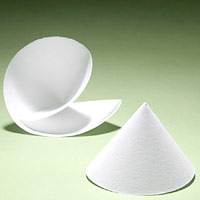
We poured 25 mL of the Na2CO3 solution and 25 mL of the CaCl2 solution into the the 250 mL beaker. After obtaining a piece of filter paper, we set up a filtering apparatus! After, we use a wash bottle to wet filter paper in the funnel. Proceeding on with the lab, pour the combined solutions into the filter funnel. Then after ,you wait until the filter process is done. After the filtering, you let the filter paper dry. The process looks something like the picture below


Anyways, on the second day we had to weigh the mass of the dried filter paper in order to come up with conclusions.

By using Stoichiometry we learned a few classes before, we determine which reactant is the excess/ limiting reactant. We also can determine how much precipitate formed by calculating the theoretical mass.

After this we calculate the percent yield. A formula that will help get you the percent yield is the following formula:

Percent yield =

actual mass produced (g)              x 100
theoretical mass produced (g)


Our results was that the CaCl2 is the limiting reactant, the excess reactant is the Na2CO3. The theoretical mass is 1.25125 CaCO3 and the percent yield is 85.5% .

Although there is no specific video about this lab, however if you do not understand how to do the calculations, the following videos will be able to help.


Friday, March 11, 2011

Excess and Limiting Reactants

Excess and Limiting Reactants...................
Photobucket


This is possibly the hardest section of this chapter.
So, before we move into the actual calculations, we should know what they are.


Up until this point, we realize balanced equations tell us what happen in the reaction. Today, we know that balanced equations only tell us what should/usually happen in the reaction, but sometimes, the necessary conditions are not present.


For example, maybe the pressure/temperature is different, or the molar concentration is not as great. 
Therefore, it is necessary to add more of one reactant than the equation predicts, because it is not possible for every atom or molecule to come together.


In other words, one reactant will be in excess (some of it will be left over) and another reactant will be used up completely. 


This will be the limiting reactant, because it limits how much of a product we can actually produce.


If a bike is made from 2 wheels and 1 seat, and we have 4 wheels and 5 seats, what is the number of bikes produced?


Photobucket
Photobucket
The answer: 2 bikes...because if we just look at seats, there are 5 bikes possible. However, there are not enough wheels to make 5 bikes. That is why the limiting reactant is the wheel, and the seat is the excess reactant. 


Now...let's get calculating!


Photobucket
We have the reaction:  AgNO3 + CaCl2 --->  AgCl + Ca(NO3)2


When 32.0 g of CaCl2 reacts with 54.2 g of AgNO3, how many grams of AgCl are formed?


First, we balance the equation: 
2 AgNO3 + CaCl2 ---> 2 AgCl + Ca(NO3)2


Now we want to convert both the reactants to the desired product. The smaller amount of product calculated is our answer. 


32.0 g CaCl2 X 1 mole CaCl2 X 2 mol AgCl X   143.4 g AgCl  = 82.6 g AgCl
                              111.1 g             1 mol CaCl2        1 mol AgCl


54.2 g AgNO3 X 1 mole AgNO3 X 2 mol AgCl    X 143.4 g AgCl = 45.7 g AgCl
                             169.9 g           2 mol AgNO3    1 mol AgCl


Clearly, 45.7 g is smaller, so only 45.7 g of AgCl will be produced from this reaction. We can also realize that AgNO3 is the limiting reactant, since there is CaCl2 left over.


Now, if the question was "How much of the excess reactant is left over?" 


We can calculate it. First, we want to see which one is limiting and which one is excess. We have done that above.


Next, since we are looking for how much of the excess reactant is left over, we want to convert the limiting reactant to the excess reactant using stoichiometry calculations.


The answer we get means 54.2 g of AgNO3 equals to ____ g of CaCl2. 


So.....  54.2 g AgNO3 X 1 mole AgNO3 X 1 mole CaCl2       X 111.1 g CaCl2        = 17.7 g CaCl2
                                      169.9 g             2 moles AgNO3    1 mole CaCl2


This means that 54.2 g of AgNO3 is equal to 17.7 g of CaCl2. 


To get the excess, we simply take the excess reactant and minus our answer above. 
32.0 g CaCl2 - 17.7 g CaCl2 = 14.3 g CaCl2


There are 14.3 g of CaCl2 left over, after 32.0 g of CaCl2 reacts with 54.2 g of AgNO3.


Now, it's time for a video and some problems!!!!
http://www.ausetute.com.au/exceslim.html
http://www.chemteam.info/Stoichiometry/WS-limiting-reagent.html
http://www.softschools.com/quizzes/chemistry/stoichiometry_limiting_reactants/quiz1210.html