Wednesday, March 16, 2011

6D Determining the Limiting Reactant and Percent Yield in a Precipitation Reaction

 Another lab!! Remember, safety first!! Always put on safety equipment first!!
Today, we conducted an experiment in by mixing two solutions together in order to form a precipitate. Our objectives were to determine which reactant is the limiting reactant and which is the excess reactant, determine the theoretical mass of the precipitate, and to calculate the percent yield.

 First of all, some supplies we needed were the following:
A Centigram
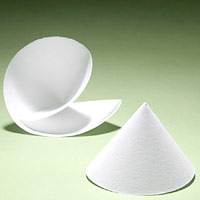
Filter Paper

So anyways....
We poured 25 mL of the Na2CO3 solution and 25 mL of the CaCl2 solution into the the 250 mL beaker. After obtaining a piece of filter paper, we set up a filtering apparatus! After, we use a wash bottle to wet filter paper in the funnel. Proceeding on with the lab, pour the combined solutions into the filter funnel. Then after ,you wait until the filter process is done. After the filtering, you let the filter paper dry. The process looks something like the picture below


Anyways, on the second day we had to weigh the mass of the dried filter paper in order to come up with conclusions.

By using Stoichiometry we learned a few classes before, we determine which reactant is the excess/ limiting reactant. We also can determine how much precipitate formed by calculating the theoretical mass.

After this we calculate the percent yield. A formula that will help get you the percent yield is the following formula:

Percent yield =

actual mass produced (g)              x 100
theoretical mass produced (g)


Our results was that the CaCl2 is the limiting reactant, the excess reactant is the Na2CO3. The theoretical mass is 1.25125 CaCO3 and the percent yield is 85.5% .

Although there is no specific video about this lab, however if you do not understand how to do the calculations, the following videos will be able to help.


Friday, March 11, 2011

Excess and Limiting Reactants

Excess and Limiting Reactants...................
Photobucket


This is possibly the hardest section of this chapter.
So, before we move into the actual calculations, we should know what they are.


Up until this point, we realize balanced equations tell us what happen in the reaction. Today, we know that balanced equations only tell us what should/usually happen in the reaction, but sometimes, the necessary conditions are not present.


For example, maybe the pressure/temperature is different, or the molar concentration is not as great. 
Therefore, it is necessary to add more of one reactant than the equation predicts, because it is not possible for every atom or molecule to come together.


In other words, one reactant will be in excess (some of it will be left over) and another reactant will be used up completely. 


This will be the limiting reactant, because it limits how much of a product we can actually produce.


If a bike is made from 2 wheels and 1 seat, and we have 4 wheels and 5 seats, what is the number of bikes produced?


Photobucket
Photobucket
The answer: 2 bikes...because if we just look at seats, there are 5 bikes possible. However, there are not enough wheels to make 5 bikes. That is why the limiting reactant is the wheel, and the seat is the excess reactant. 


Now...let's get calculating!


Photobucket
We have the reaction:  AgNO3 + CaCl2 --->  AgCl + Ca(NO3)2


When 32.0 g of CaCl2 reacts with 54.2 g of AgNO3, how many grams of AgCl are formed?


First, we balance the equation: 
2 AgNO3 + CaCl2 ---> 2 AgCl + Ca(NO3)2


Now we want to convert both the reactants to the desired product. The smaller amount of product calculated is our answer. 


32.0 g CaCl2 X 1 mole CaCl2 X 2 mol AgCl X   143.4 g AgCl  = 82.6 g AgCl
                              111.1 g             1 mol CaCl2        1 mol AgCl


54.2 g AgNO3 X 1 mole AgNO3 X 2 mol AgCl    X 143.4 g AgCl = 45.7 g AgCl
                             169.9 g           2 mol AgNO3    1 mol AgCl


Clearly, 45.7 g is smaller, so only 45.7 g of AgCl will be produced from this reaction. We can also realize that AgNO3 is the limiting reactant, since there is CaCl2 left over.


Now, if the question was "How much of the excess reactant is left over?" 


We can calculate it. First, we want to see which one is limiting and which one is excess. We have done that above.


Next, since we are looking for how much of the excess reactant is left over, we want to convert the limiting reactant to the excess reactant using stoichiometry calculations.


The answer we get means 54.2 g of AgNO3 equals to ____ g of CaCl2. 


So.....  54.2 g AgNO3 X 1 mole AgNO3 X 1 mole CaCl2       X 111.1 g CaCl2        = 17.7 g CaCl2
                                      169.9 g             2 moles AgNO3    1 mole CaCl2


This means that 54.2 g of AgNO3 is equal to 17.7 g of CaCl2. 


To get the excess, we simply take the excess reactant and minus our answer above. 
32.0 g CaCl2 - 17.7 g CaCl2 = 14.3 g CaCl2


There are 14.3 g of CaCl2 left over, after 32.0 g of CaCl2 reacts with 54.2 g of AgNO3.


Now, it's time for a video and some problems!!!!
http://www.ausetute.com.au/exceslim.html
http://www.chemteam.info/Stoichiometry/WS-limiting-reagent.html
http://www.softschools.com/quizzes/chemistry/stoichiometry_limiting_reactants/quiz1210.html

Monday, March 7, 2011

Stoichiometry Calculations.....NOW WITH MOLARITY AND VOLUME!

OK, so last blog, you learned about doing some simple stoichiometry calculations that involved converting the mass of one substance into the mass of another substance.


Now, let's pull out the mole map
Photobucket

We're going to try some harder conversions: by including Molarity conversions and Molar Volume.

So, as we all remember, molarity is the molar concentration. The formula is M = mol/V

Photobucket

Let's try an example:
We have a chemical equation of
NaCl + CaO ---> Na2O + CaCl2

and we have 120 mL of a 0.300 M solution of NaCl. How many grams of CaCl2 are produced?

First, we balance:
2 NaCl + CaO ---> Na2O + CaCl2

Then, we figure out how many moles of NaCl there are, based on the information given:

M = mol/V   ---> mol = MV
mol NaCl = (0.120)*(0.300) = 0.0360 mol NaCl

0.0360 mol NaCl X 1 mol CaCl2 X 111.1g           =  1.9998 (2 SF = 2.0g CaCl2)
                                 2 mol NaCl     1 mol CaCl2

This answer tells us that 2.0 g of CaCl2 is produced when 120 mL of 0.300 M solution of NaCl reacts with sufficient CaO.

Now, we can also add on Molar Volume calculations.
Recall that there are 22.4L per mole in STP conditions (Standard temperature and pressure)
Photobucket

Let's try another example:
We have the chemical reaction:  Li2O + MgCl2 ---> LiCl + MgO
How many grams of Li2O will produce 9.0 L of MgO at STP?

First, we balance:
Li2O + MgCl2 ---> 2 LiCl + MgO

Now, we convert:
9.0L MgO X 1 mol MgO X 1 mol Li2O X     29.8g      =  11.97 (2 SF = 12 g)
                         22.4 L          1 mol MgO    1 mol Li2O

So this means that 12 g of Li2O reacts with sufficient MgCl2 in order to produce 9.0 L of MgO

Now, here are some problems, as well as a video:


Thursday, March 3, 2011

Stoichiometry Calculations!!!

Well.. we're back to moles AGAIN. After this year of chem... I'm gonna go play some whack-a-mole! Not even kidding!

Anyways... Stoichiometry involves particles, mass and MOLES! Well lets start off this blog/lesson with a mole map! Stoichiometry deals with quantitative relationships between a reactant and product. That is why the relations for the quantities can usually produce a ratio of some sort!


Well ok.. so how to do these calculations. Well it is easier to these calculations in steps.

The First Step: Make an equation out of the word problem, and balance it!
The Second Step: You can make a road map to help you visualize what you need to do
The Third Step: Follow the map and calculate what you need to calculate!!!

Well lets learn more about Stoichiometry by doing a few examples first.

Ex 1/ Consider this equation:  2KMnO4 + 16HCl --> 2 KCl + 2MnCl2 + 8H2O + 5Cl2
How many grams of KMnO4 will be needed to react with 2.30 moles of H2O?

 Step 1 is already done for you because it is already balanced!
Step 2:  2.30 moles H2O --> moles KMn04 --> ? grams KMnO4
Step 3:

2.30 moles H2O x 2 mole KMnO4    x  158.0 g KMnO4  = 90.8 grams KMnO4
                              8 mole H2O        

REMEMBER TO DO YOUR SIG FIGS!!!! ANYWAYS! That was easy right???

Well... If you are like me, and is REALLY confused...here is a pattern you can refer to!!!

grams(x)<-->moles(x)<-->moles(y)<-->grams(x)


You can start as well as go anywhere along this path, as long as you do it in the correct order!!
Now that you have this in mind.. lets start do one more example!

Example 2/


Consider this equation: 4KO2 + 2H2O --> 4KOH + 3O2

How many moles of KO2 can be made using  4.50 mole O2?

4.50mole O2 x 4 mole KO2   = 6 mole KO2
                     
                          3 mole O2

K.. You might THINK you had enough of Stoichiometry and moles.. but don't worry it'll come to haunt you next lesson too! Soo.. you might as well do some more practice on these sites!
http://library.thinkquest.org/10429/high/stoich/question.htm
http://www.askmehelpdesk.com/chemistry/stoichiometry-problems-176369.html
http://www.askmehelpdesk.com/chemistry/stoichiometry-questions-113202.html


WELL .. if u don't understand the way I iunno... taught the lesson... well SUCK IT UP! and... i guess you  can watch this video!


Tuesday, March 1, 2011

Chapter 6 - Stoichiometry

Our next chapter in the intense study of chemistry is about stoichiometry.
Wait, wait, wait.....stoichio wha?????????
The Greek root stoichio means element, and mentry meaning measurement.

Photobucket

So, it's all about element measurements. At least, that's what the word means.
What it is really about is the analysis of chemical reactions, measuring amounts of elements and compounds that are involved in any given reaction. It is the relationship of reactants used vs products created.

Photobucket

E.g. 2H2      +      O2 --->     2H2O     From our previous knowledge, we can say:
    2 g/mol        32 g/mol      18 g/mol
     4 H's              2 O            4 H's 2 O's

From the same example, we can take the coefficients as a number of moles or a number of molecules. So in other words, we can treat them as:
2 moles H2 + 1 moles O2 ---> 2 moles H2O
The ratio we are given, 2:1:2 is called the mole ratio.

In order to perform the stoichiometry calculations, we must have:

A balanced chemical reaction
A ratio of molecules or moles of substances in the chemical reaction (you will get this when the equation is balanced)

The coefficients tells us how many moles of each substance were reacted or produced. This is where the deadly mole conversion factors come back into play!

Let's start with an example:

How about: Na + Cl2 ---> NaCl

So first, let's check if it's balanced.

2Na + Cl2 ---> 2NaCl

Now it is! Ok, so how many moles of NaCl are produced when 12 moles of Na are produced?

We start off writing down 12 moles Na. To get to moles of NaCl, we must multiply by where we want to go over where we started.

In other words: 12 moles Na   X   2 mole NaCl 
                                                      2 mole Na
(There are 2 moles of Na for every 2 moles of NaCl, as shown in the chemical equation.)
We can cancel out moles of Na to get to our answer. Through simple multiplication, we realize that 12 moles of NaCl are created when 12 moles of Na reacts with chlorine.

Now enough of us, and time for you to get cracking!
http://www.sciencebugz.com/chemistry/chprbstoich.html
http://www.standnes.no/chemix/examples/stoichiometry-problems-chemistry.htm

Monday, February 21, 2011

Enthalpy Calculations

Well, in order to do enthalpy calculations, you should know what enthalpy is. Enthalpy is the measure of total energy in a system. This symbol (ΔH), indicates the change in the reaction in KJ/mole. That indicates the change in potential energy during the reaction. To calculate that you use this formula: (energy of products - energy of reactants).

So... this lesson is kind of hard to explain unless with an example. So.. let's start with an exampleee =)

*When the KJ is on the right side of an equation, it becomes a negative number as it is an exothermic reaction. Vice versa, when the KJ is on the left side, it is positive as the reaction is endothermic.

Example 1 /

2 NO2(g) + O2(g) --> 2 NO2 + 131 KJ

well... we can see that in this reaction, the KJ/moles can be expressed in these ways :

- 131 KJ       or  -131KJ___     which can reduce to  -65.5 KJ__     
  1 mol O2         2 mol NO2                                      1 mol NO2                                                                         
    and again... -65.5 KJ__
                       1 mol NO2             

Now that you know these, it will be much easier to calculate the energy release, and how many moles needed to produce a certain amount of energy.

1. Ex/ Calculate the energy released when 0.55 moles of NO2 is produced.

So... back to mole conversions...again =.=" We set up the equation...

0.55 moles NO2   x   -65.5 KJ__    =   -36KJ  
                               1 mol NO2   


So.. remember to do your sig figs, and because it is a negative number, it is releasing energy, thus it is a exothermic reaction.

2. Ex/ How many moles of O2 are needed to produce 1523KJ of energy?

1523 KJ   x  1 mol O2   =  - 11.63 moles = 11.63 moles O2
                    -131 KJ

* Moles cannot be a negative number, so when this case repeats itself, drop the negative sign.

SEE! isn't it easy? Yay .... well ya think u so smart? Why don'tcha try doing these practice problems first:

http://www.docstoc.com/docs/19490471/Enthalpy-Worksheet
http://spiepho.sbc.edu/worksheets/ ( click on the 2nd Chapter 6)

Well...If you still need help, i guess you can watch these videos:


YAY. all is well? :) ok good good...good stuff x)

Wednesday, February 16, 2011

Endothermic and Exothermic Reactions

What are endothermic and exothermic reactions?

All chemical reactions have something to do with energy. It just depends on whether energy is released or absorbed. If energy is released, it is exothermic. If energy is absorbed, it is endothermic.

For example, if you hold on to an ice pack, after a few minutes, the ice will start to melt. You can realize that this ice has absorbed energy (heat) and is an endothermic reaction.

Photobucket

In bombs and explosions, heat is released as things explode into pieces, making it an exothermic reaction.

Photobucket

In any kind of reaction, molecules stay together by chemical bonds, and we can add energy to break the bonds or release energy to make them join together.

Now, we can get a more detailed definition of endo and exothermic reactions.

If a reaction needs more energy to break bonds than it does to give off energy in order to form bonds, it is endothermic.

In contrary, if a reaction takes less energy to break bonds than it does to give off energy to from bonds, it is exothermic.

We can express this energy as enthalpy (H), which is the heat contained in the system.

Now, for us to tell whether a reaction is exothermic or endothermic, we can use energy diagrams.
The purpose of the energy diagram is to show potential energy of chemicals as they change from reactants to products vs. time.

Reactants start with a certain amount of energy, and as energy is added to start the reaction, the amount of energy at the end can be lesser or greater, depending on the type of reaction.

Photobucket

In the diagram above, the substrate is the reactant. We can call its starting point the energy of reactants. We can also call the end point of this graph the energy of products.

The energy of activated complex is the highest point of the entire graph, and this is usually located in the middle of the graph.

The activation energy is the amount of energy that must be added to start up the reaction. This can be calculated by Energy of Activated Complex - Energy of Reactants.

Finally, the change in energy between the substrate and the product is ΔH or change in enthalpy. This can be calculated by Energy of Products - Energy of Reactants.

Using the information, we can tell if a reaction is exothermic or endothermic. How?
Well, all we have to do is check if the change in enthalpy is positive or negative.

If it is negative, it means that the Energy of Products is lesser than the Energy of Reactants, or in other words, energy was released, so it is exothermic.

Photobucket

If it is positive, it means that the Energy of Products is greater than the Energy of Reactants, so energy was added or absorbed, and it is endothermic.

Photobucket

Now, after determining whether it was exothermic or endothermic, we can incorporate the amount of energy gained or lost into the chemical equation. If it is exothermic, you would add the energy onto the right hand side of the equation.

For example, 2 C2H6 + 7 O2 --> 4 CO2 + 6 H2O + 800 kJ (this 800 is a made-up number, just to give an example. It can be any number, depending on the amount of energy.)

If you see the energy on the right hand side, it is exothermic. Contrarily, if the number in kJ is on the left hand side, it is endothermic.

Here is a video explaining energy diagrams in more detail:


Here is a worksheet for practice:
http://colgurchemistry.com/Chem12/pdfs/Microsoft%20Word%20-%20Ch%2012%20Worksheet%201-2_doc.pdf
http://gohs1.tvusd.k12.ca.us/TeacherWebs/science/JMacLean/IB-AP%20Chemistry/Chapter%2012/Potential%20Energy%20Diagram%20ws.pdf